October 15, 2026 | VibeCoding Newsletter
Marc Lou vibe-coded a beehiiv rival, and builders ask what SaaS is still worth
The editor's note
This week the question moved from "can AI build software?" to "which software is still worth paying for?" Marc Lou shipped an open-source newsletter platform aimed straight at beehiiv. Pieter Levels says he has cancelled almost every SaaS subscription he had. And Philipp Keller asked the uncomfortable follow-up: if building got so much faster, where is all the better software?
We also cover Lovable's move from building apps to buying ads for them, a beginner tutorial from Netlify, and the week's news across Cursor, Replit, Google and GitHub.
The headline
Marc Lou launches MailCheap: an open-source, agent-ready newsletter platform
Marc Lou, the solo founder behind ShipFast, CodeFast and DataFast, launched MailCheap on October 15 with a direct pitch: "I vibe-coded beehiiv, and it's 83% cheaper."
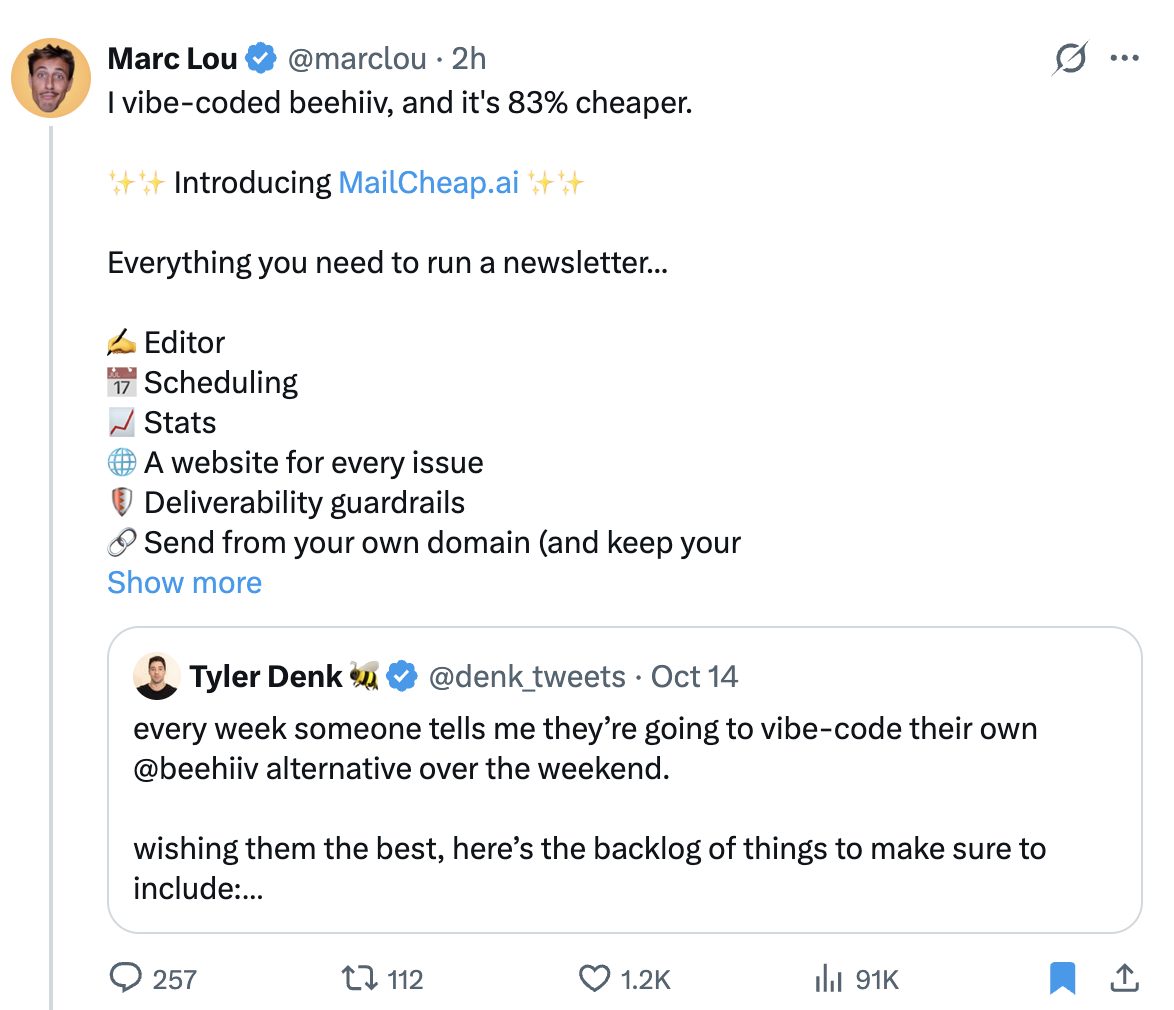
Image: Marc Lou on X.
The launch quoted beehiiv CEO Tyler Denk, who posted a day earlier that "every week someone tells me they're going to vibe-code their own beehiiv alternative." Denk followed with a long backlog of features such a project would need. Marc's answer was a working product.
What you get. An editor, scheduling, stats, a public web page for every issue, deliverability guardrails, and sending from your own domain. You can import a list from beehiiv, Substack or Mailchimp, and there is no "Powered by" badge in your emails.
It is open source. The code is on GitHub under AGPL-3.0 (only the very first release was MIT). You can self-host it for free on Next.js, MongoDB and Amazon SES or PostShiba. The README estimates about an hour of setup on Node 22+, with no support.
It is agentic. Everything in the dashboard is also available through a REST API and an MCP server with 44 tools. ChatGPT, Claude and Grok Bot connect by signing in; Claude Code, Codex and Cursor connect with an API key or sign-in. In practice, your AI assistant can draft an issue, send a test, check stats or clean a list for you.
Pricing follows sends, not subscribers. Plans start at $19/month for 20,000 emails and 10,000 subscribers, rising to $349 for 2 million emails. The 83% figure comes from MailCheap's own comparison: 4,000 subscribers and one email a week cost $19 on MailCheap versus $109 on beehiiv's Lite plan.
Critical reality. The comparison is one list size and one sending rhythm; run your own numbers before you switch. beehiiv also covers growth tools, paid subscriptions and an ad network that a week-old product does not. New accounts go through a 30-day warm-up (up to 200 emails at once, larger sends spread over hours), so test on a slice of your list first. And self-hosting means you own deliverability, bounces and abuse handling.
MailCheap · Source code · Agent docs
The SaaS debate
Pieter Levels cancels his SaaS stack
On October 11, Pieter Levels posted that he has cancelled almost all of his SaaS subscriptions. For his businesses, what remains is AI inference, Hetzner, Cloudflare storage, Backblaze and taxes. Personally, he keeps Claude Code, YouTube, Spotify, Starlink, a phone plan, cloud storage and utilities. For the rest, he vibe-codes his own versions or has Claude customize open-source tools.
His conclusion: his money now flows to content, data centers, power plants and governments, and he expects "a tidal wave of cancellations." He quoted an argument that if just 1% of people can build software, supply floods the market and prices collapse. A month earlier he listed 14 tools he replaced, from Mapbox to uptime monitoring, with savings he puts at about $25,000 a month.
The post drew more than 4,000 likes and 450 replies, and they split into clear camps:
- "We are doing this too." Job van der Voort, co-founder and CEO of Remote, replied that Remote is cancelling everything it can and that "the end is in sight for about 80% of all SaaS." Others shared smaller wins, like having Claude find cheaper insurance and electricity.
- "Your time is not free." One founder valued an hour of founder time at $1,000 to $5,000; at that rate, rebuilding a $50 tool loses money.
- "Tokens are just another subscription." As one reply put it: "Cancelling subscriptions to pay for tokens is just a different subscription." Others warned that one AI vendor could then reprice everything at once.
- "You pay for maintenance, not features." Customers buy polish, uptime and someone to blame. Most people are not technical, and one reply noted that nobody seems to be cancelling Jira.
Our take: for builders, the opening is not "nobody pays for software." It is that small, focused, cheaper tools can now win customers that bloated suites took for granted. MailCheap is this week's example.
"Do we actually have better software since AI?"
On October 7, Philipp Keller, a Zurich-based product manager and indie builder, asked which product got twice as good in the past three years, adding that vibe coding "feels faster but the production gain is 20% at most." The post passed 217,000 views and 468 replies.
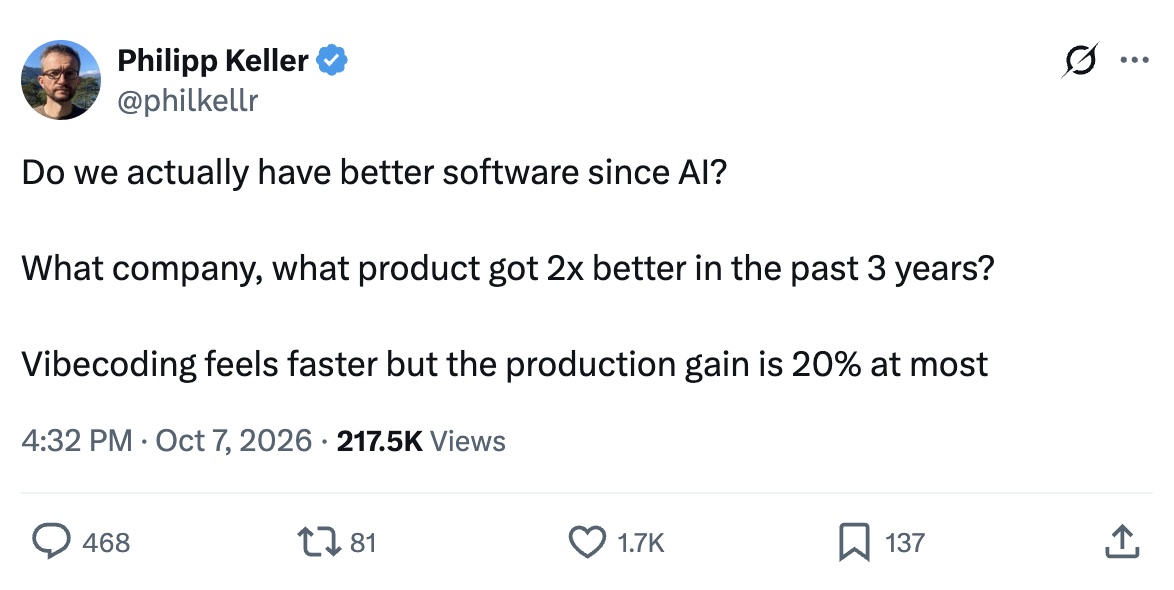
Image: Philipp Keller on X.
The most-liked reply was simple: "We definitely have more software." Keller's answer: whether that is a good thing is unclear to him. His distinction between feature gains and product gains ran through the whole thread.
- Quality can go up. Open-source veteran Eric S. Raymond replied that AI "has lowered the defect incidence in my code dramatically." Others pointed to faster bug-finding and tests.
- Solo builders feel it most. Indie developers reported large personal speed-ups, with the caveat that they stay at the steering wheel to avoid slop.
- The cost may be hidden. Skeptics pointed to security vulnerabilities and downtime, weaker UX, and code review as the new bottleneck. Keller added that everyone is vibe coding so much that nobody has time to use the new features.
The data is just as mixed. In a 2025 randomized study by METR, experienced open-source developers took 19% longer with AI tools, while believing they had been faster. METR's February 2026 update says developers are probably faster now, but the evidence is weak. Google's 2025 DORA report found that 90% of developers use AI and links it to higher throughput, but also to lower stability. The lesson: measure your own speed and your bug rate, instead of trusting how fast it feels.
Featured tool
Lovable now helps you find customers, not just build the app
Lovable's newest launch is about distribution. On October 14, it introduced growth tools that let you create and launch ads from the same chat where you built your app, on Google, YouTube, Facebook and Instagram.
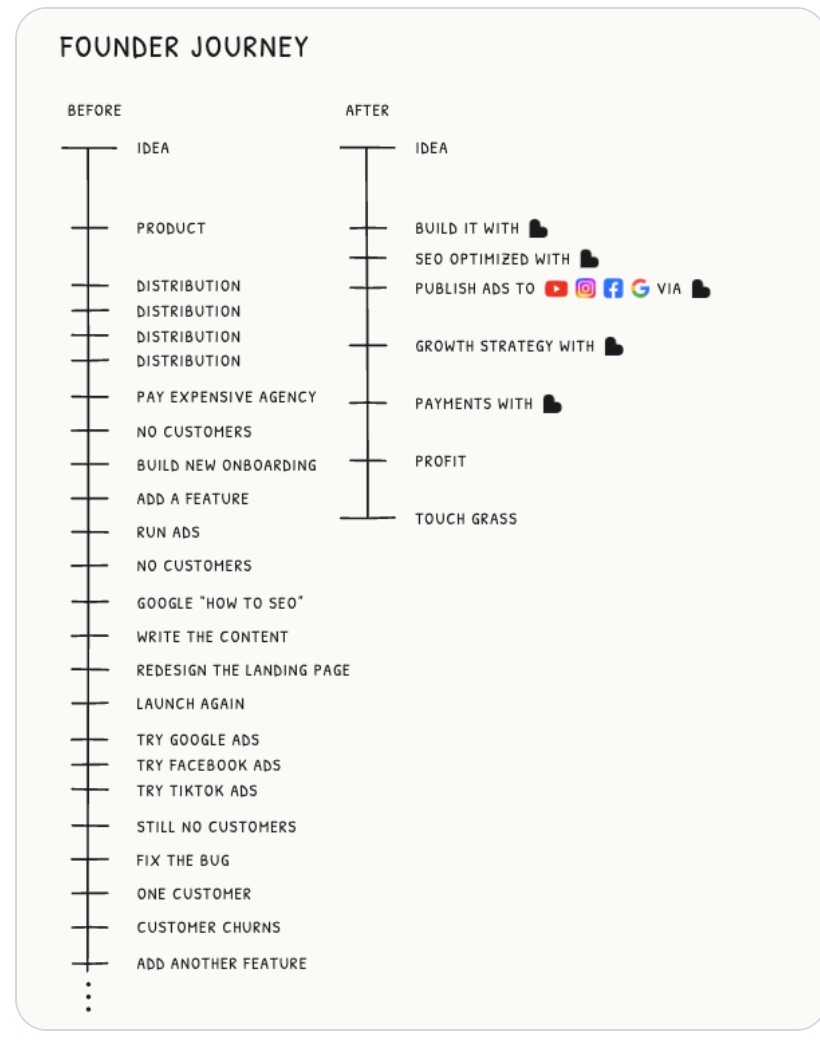
Image: Lovable CEO Anton Osika, via X.
How it works. Lovable generates ad copy, images and video from your build and proposes three creative directions. It connects to Google Ads (Search, YouTube, Gmail, Maps, Display, Discover) and to Meta (Facebook and Instagram feeds, Stories and Reels), and installs the Google tag or Meta Pixel for you. You do not need an existing ad account.
What it costs. According to the ads documentation, Lovable adds no fee on top of your ad spend, which Google or Meta bills directly. Planning and creative use normal Lovable credits, and the tools are available on all plans.
Why it matters. This completes a go-to-market stack Lovable has been assembling all year: SEO and AI-search visibility in May, connectors for beehiiv, Klaviyo and Loops in October, and payments through Stripe or Paddle. The pitch is that a solo builder can go from idea to paying customers without an agency.
Critical reality. Nothing runs without your approval, but read the details. Google campaigns start enabled unless you ask for them paused, and Google can spend up to twice your daily budget on some days. Campaigns need a published site, and Meta asks for a payment method before it creates even a paused ad. Ads amplify a product; they do not fix one that nobody wants.
Meme of the week
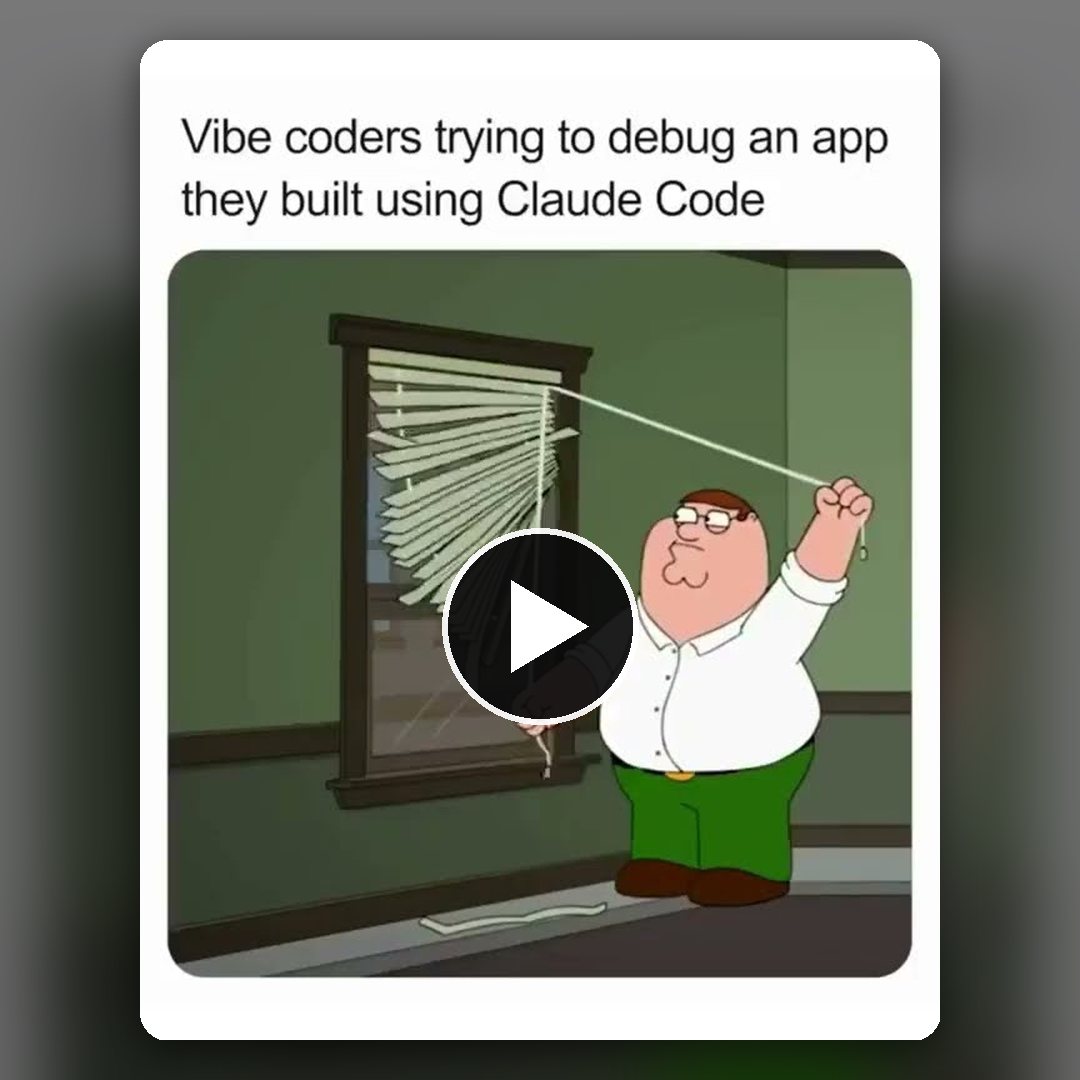
"Vibe coders trying to debug an app they built using Claude Code." Video: Coding Xpress on YouTube.
Funny because every fix pulls the next thing loose. Ask the agent to explain the bug before you ask it to fix it.
Tutorials worth your time
Netlify: How To Build An App with AI Gateway (for beginners)
Netlify streamed a beginner walkthrough today: How To Build An App with AI Gateway. It is a good starting point if you want AI features in your app without juggling provider accounts.
AI Gateway lets your code call models from Anthropic, OpenAI and Google without your own API keys: Netlify sets the keys for you and bills usage in Netlify credits. It works on the Free, Personal and Pro plans, after your site's first production deploy.
To go further with Netlify:
- Agent Runners run Claude Code, Codex, Gemini or OpenCode against your project in a sandbox and give you a Deploy Preview to approve.
- Better agent runs with prompt templates and skills shows how to get more reliable results from those agents.
- Deploy your Lovable app to Netlify covers the GitHub route, Supabase environment variables and redirects.
Four videos for every level
- Big picture: Andrej Karpathy: Software Is Changing (Again), the Y Combinator talk behind "Software 3.0." Watched about 2.6 million times.
- Complete beginners: Vibe Coding Fundamentals In 33 minutes by Tina Huang. A clear first hour, if you have never built an app.
- Build along: Vibe Coding for Beginners (Full Course 2026) by Riley Brown, about 55 minutes.
- Go deep: Claude Code Essentials, freeCodeCamp's free course of about 12 hours, from first prompt to advanced terminal workflows.
Sponsors
Enrich Layer: people, company and job data for your app and your agents
Your agent can write the outreach email. Enrich Layer gives it the facts to get right.
Enrich Layer provides structured people, company and job data through one API. Look up a person by name or company and get their roles, skills and education. Search companies by domain for industry, size, locations, funding and hiring activity. Pull current job listings to see who is hiring and for which roles.
The team also offers an MCP server, so coding and research agents can query the same data directly. Credits are pay-as-you-go and do not expire with regular use, and you can start with a trial API key.
each::labs: one API for the AI models in your app
Stop wiring a new provider every time you want a better model.
each::labs gives you one API for more than 600 AI models across video, image, audio, text and 3D, from over 46 providers. It handles the production work too: automatic fallback when a provider degrades, multi-model workflows and full observability.
Pricing is pay-as-you-go, with no subscriptions and no separate account for each provider. The API is OpenAI-compatible, so many apps only need a new base URL.
News and updates
- Google Play runs your private vibe-coded apps. Build an Android app in Google AI Studio and install it privately on your own device through Google Play, without a developer account. It is rolling out in select markets, including the US, for users 18 and over.
- Cursor opens its app marketplace. The Origin App Marketplace lists more than 20 apps, including Vercel, Cloudflare, Sentry and Linear, and now accepts public submissions. Cursor also added Remote Control, to watch and answer local agents from its iOS app.
- Replit Desktop builds locally on Windows. In private preview, Replit Desktop builds and runs apps on your own machine, with each build in an isolated sandbox.
- Claude Haiku 5.5 arrives, and Copilot sandboxes by default. Anthropic released Claude Haiku 5.5 at $0.10 per million input tokens and $0.50 per million output tokens, now the default Haiku in Claude Code. GitHub added it to Copilot the same week and made local sandboxing generally available at no extra cost.
- Attackers use coding agents too. Researchers reported a group running up to 51 Claude Code agents against WordPress and e-commerce sites, taking more than 628,000 records from four Ukrainian organizations. If your app runs on a popular CMS or store, patch it and lock down admin access.
Community spotlight
Three projects from readers who submitted them this week.
PreflightPR: a security check before you launch
PreflightPR scans a vibe-coded repository for leaked keys, Supabase tables without row-level security, unauthenticated API routes and unverified Stripe webhooks, then opens a pull request with fixes. The scan is free. Run it before launch day, not after your first incident.
Fidelius: your API keys leak through debug output
Maria tested what Claude Code and Codex do with a .env file full of fake keys. Deny rules kept the agents out of the file, but when an app printed its config or an error, the key reached the agent in 41 of 42 runs. Her write-up includes free fixes; Fidelius is her Mac app that masks keys in agent output.
Slopverse: a game built by a crew of agents
Jonathan Larson built Slopverse, a browser role-playing game where every move comes back as a film scene, by directing parallel Claude Code agents: one orchestrator handing tasks to workers in separate git worktrees. There is a free demo with no sign-up. It shows how far one person can take a project with the right agent setup.
Free resources
- Vibe Coding 101 with Replit: a free DeepLearning.AI short course taught by Replit's team, about 90 minutes, for beginners.
- Claude Code Quickstart: the official setup guide, including help for people who have never opened a terminal.
- How to Use Lovable Responsibly: freeCodeCamp's plain-language guide to secrets, auth and input validation, with a pre-release checklist.
Hackathons: build with others at the Vibe Coding Hackathon, join HackOnVibe online on November 13-15, or go to the STARTPLATZ AI Coding Hackathon in Cologne on November 20-22, which has a vibe coding track.
Building something worth sharing? Post it in r/vibecodingcommunity, or submit it to VibeCoding Newsletter.